
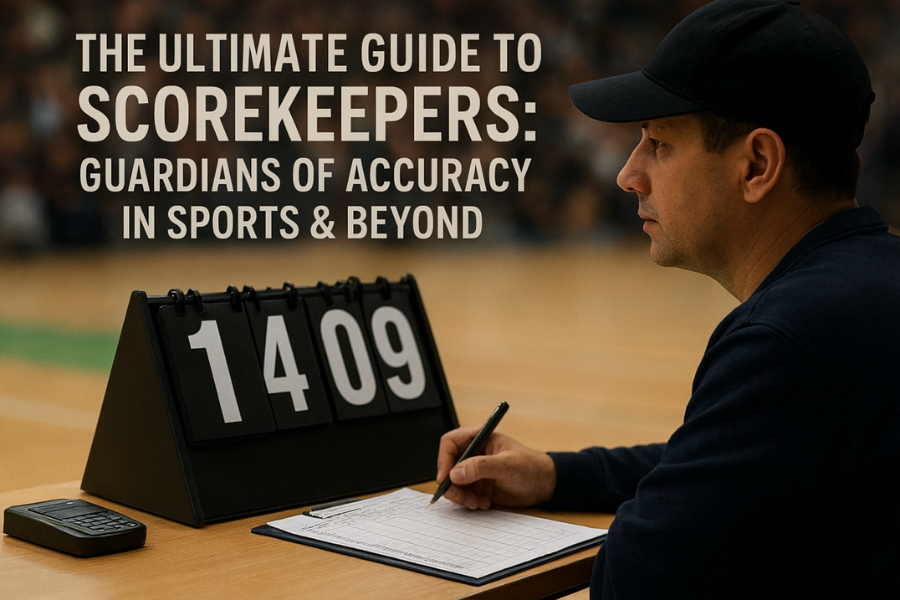

Every game tells a story, and numbers preserve that story with precision. A scorekeeper ensures that every point, foul, and statistic reflects the truth of competition. You depend on them for fairness, and teams rely on their records for strategy. Fans trust their work as the official history of the match. The role extends across sports, eSports, and even board games, where accuracy defines credibility. A scorekeeper stands as the silent guardian of integrity, shaping how every contest is remembered.
Why Does Every Game Need a Scorekeeper?
Every game depends on accuracy. A scorekeeper ensures that every point, goal, or run is recorded without error. You rely on them for fairness, and coaches depend on them for strategy. Fans trust their numbers as the official truth. Without a scorekeeper, competition loses credibility.
What Are the Core Duties of a Scorekeeper?
A scorekeeper has one mission: record every detail of a match with precision.
- Record the score: Points, goals, or runs.
- Track player statistics: Fouls, assists, rebounds, shots on goal, or pitch counts.
- Operate equipment: Scoreboards, shot clocks, and timers.
- Document events: Substitutions, penalties, and timeouts.
- Communicate with officials: Confirm scores and resolve disputes.
- Manage records: Rosters, reports, and official statistics.
Across sports, eSports, and even board games, the role adapts. In bridge tournaments, scorekeepers log round results. In eSports, they track kill/death ratios and objectives. In casual games, apps like KeepTheScore or Google Sheets provide digital solutions.
What Skills Define a Great Scorekeeper?
Accuracy depends on skill. A professional scorekeeper combines focus with composure.
| Skill | Why It Matters |
| Attention to Detail | Prevents errors in fast-paced games |
| Organization | Handles multiple stats at once |
| Efficiency | Records data instantly |
| Game Knowledge | Interprets rules correctly |
| Neutrality | Maintains fairness |
| Tech Savviness | Uses tools like LiveStats or Excel |
| Communication | Coordinates with referees and coaches |
Do you see how these skills mirror the qualities of referees? Both roles demand impartiality and precision.
How Can You Become a Scorekeeper?
You can start at the community level. Volunteer at youth leagues or schools. Practice by scoring recorded games. Use templates or apps to build speed and accuracy.
You can advance with education. Degrees in sports management or statistics add value. Certifications from leagues or associations open professional doors. Experience at amateur levels builds credibility. Specialization in one sport or eSports creates expertise.
What Career Paths Exist for Scorekeepers?
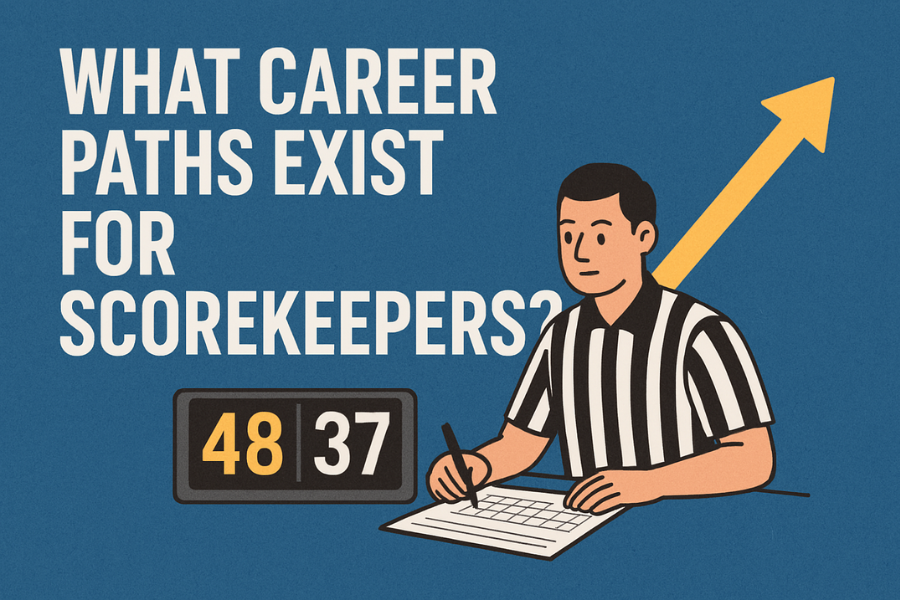
A career in scorekeeping can grow step by step.
- Amateur leagues → High school → College → Professional teams.
- Specialization in basketball, baseball, or eSports.
- Advancement into head scorekeeper or supervisor roles.
- Transition into coaching, analytics, or sports management.
According to U.S. labor data, the average salary for scorekeepers is $26,000 annually, with higher pay in professional leagues. Entry-level roles often remain volunteer-based, but professional “stat crews” earn competitive wages.
Where Do Scorekeepers Work?
You find scorekeepers in every competitive arena.
- Professional leagues: NBA, MLB, NHL.
- Collegiate sports: NCAA and international tournaments.
- High schools: Essential for organized athletics.
- Amateur leagues: Community-driven and volunteer-based.
- eSports: Global tournaments with millions of viewers.
- Board games: Bridge, chess, and structured competitions.
Did you know that eSports tournaments now attract more than 30 million live viewers worldwide? Scorekeepers in this field manage data at the same scale as traditional sports.
What Pro Tips Help You Excel as a Scorekeeper?
- Practice with recorded games to sharpen reflexes.
- Double-check totals at intervals to avoid mistakes.
- Stay calm under pressure when the pace intensifies.
- Aim for invisibility: the best scorekeepers are noticed only when absent.
Why Is the Role So Important?
A scorekeeper safeguards the integrity of competition. Every statistic, every point, and every record depends on their accuracy. You can think of them as the silent referee of numbers.
In short: No scorekeeper, no game.
FAQs
What is the role of a scorekeeper?
A scorekeeper records the official score, player statistics, and game events. They manage the scoreboard, timers, and official documents. They also confirm results with referees to ensure accuracy.
Is scorekeeping a paid job?
Entry-level scorekeeping often starts as volunteer work. High schools and amateur leagues may offer small stipends. Professional leagues employ trained “stat crews” with higher pay. The average salary in the United States is about $26,000 per year.
How do you become a scorekeeper?
You can start by volunteering at local leagues or schools. Practice with recorded games to build speed. Use digital tools like LiveStats or KeepTheScore. For advanced roles, pursue certifications or degrees in sports management or statistics.
What skills do scorekeepers need?
Scorekeepers need attention to detail, organization, and efficiency. They must understand the rules of the sport. They also need neutrality, communication skills, and the ability to use digital tools.
Where do scorekeepers work?
Scorekeepers work in professional leagues like the NBA or MLB, in colleges, and in high schools. They also support amateur leagues, eSports tournaments, and board game competitions.
Can scorekeeping lead to a career?
Yes. Many scorekeepers move from youth leagues to professional teams. Some specialize in one sport. Others advance into roles such as head scorekeeper, supervisor of officials, or sports analyst.
Why is a scorekeeper important?
A scorekeeper ensures fairness and accuracy. Every statistic and record depends on their work. Without them, games lose credibility and teams lose reliable data for strategy.“QuickFast— Where smart voices meet fast reads.”