

When filmmakers ask “How long should my short film be?” The answer isn’t as simple as a single number. While the Academy of Motion Picture Arts and Sciences defines a short film as 40 minutes or less (including credits), the ideal length depends on your goals, your story, and—most importantly—the festivals or platforms you’re targeting.
This guide breaks down everything you need to know: industry standards, festival rules, storytelling strategy, and practical tips to make every minute count.
How long is a short film?
You want a clear answer fast. The Academy defines a short film as 40 minutes or less, credits counted. Festival rules vary, so you must check targets early. Your goal shapes the final cut, not a single number.
- Academy cutoff: 40 minutes or less, credits counted.
- Sundance limit: Up to 50 minutes.
- Tribeca limit: 40 minutes or less.
- Venice limit: 30 minutes or less.
Do you plan to submit to a specific festival? You boost selection odds when your runtime aligns with gatekeepers. The Academy sets the Oscar bar at 40 minutes. Sundance accepts up to 50 minutes, but curators rarely slot the longest shorts.
What runtime gives you the best odds?
Festival programmers favor tight films. You gain flexibility when you sit in the 5–15 minute band. Micro-shorts win online attention and niche contests.
- Micro-shorts: 1–5 minutes.
- Sweet spot: 5–15 minutes for most festivals.
- Complex stories: 10–20 minutes works well.
- Upper band: 30–40 minutes carries risk.
Do you want reach or depth? Most blocks run multiple shorts, so a 12-minute cut fits more slots than a 35-minute cut. Many curators report higher acceptance for concise films in the 5–15 minute range.
What factors shape the ideal length?
Your story, genre, and release path guide the right cut. Simple ideas land fast. Complex arcs need room.
- Story complexity: One idea can land in under 10 minutes; layered arcs may need 20–30 minutes.
- Genre norms:
- Comedy: 3–10 minutes for punch and pace.
- Drama: 10–20 minutes for character turns.
- Documentary: Up to 30–40 minutes when stakes and scope demand time.
- Experimental: Often micro-shorts for impact.
- Distribution goals:
- Festivals: Aim for 5–15 minutes.
- Online: Under 5 minutes helps share rates.
- Portfolio: Longer shorts may showcase range yet face programming friction.
- Budget reality: Shorter films reduce cost and time.
Do you target online first? Under 5 minutes often increases completion rates. Festival blocks favor range and pace, so shorter cuts secure more windows.
How do script pages convert to minutes?
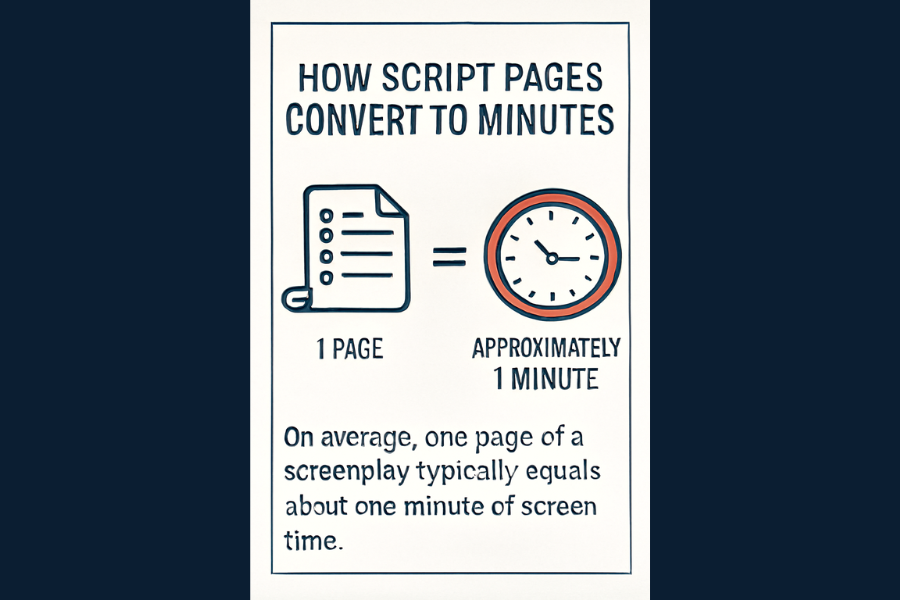
You can plan your draft with a simple rule. One page equals about one minute on screen.
- 5 pages: About 5 minutes.
- 20 pages: About 20 minutes.
- 40 pages: About 40 minutes.
Do you draft for a 12-minute target? Set a 12–13 page script to allow air for performance and credits. You keep control when the page count matches your submission plan.
Why do festivals favor shorter films?
Curators juggle volume and diversity. A single 40-minute short can consume the space of three 10–12 minute films.
- Block capacity: More shorts equals more voices per block.
- Audience energy: Tight pacing lifts attention and response.
- Selection math: Shorter runtimes increase scheduling options.
Do you want awards potential? Strong pace, clean structure, and a clear idea drive judges to yes. You stack odds when every scene earns its slot.
How can you cut runtime and keep impact?
You trim fat, not muscle. You protect clarity and pace with decisive edits.
- Kill weak scenes: Remove any scene that fails to advance plot or character.
- Enter late, exit early: Land the beat, then cut.
- Replace talk with visuals: Use action and framing over exposition.
- Run test views: Note drift points, then tighten.
Do viewers check the time at minute eight? Cut backstory lines and compress transitions. Your story breathes when moments carry purpose.
Can your short become a feature?
You can build a feature from a sharp short. Several major films started as shorts and used festivals as launch pads.
- Whiplash: 18-minute short led to an Oscar-winning feature.
- District 9: Short idea grew into a sci‑fi milestone.
- Saw: Proof short seeded a global franchise.
- What We Do in the Shadows: Short turned into a cult feature and series.
Do you aim for proof of concept? Focus on a core hook, deliver a standout scene suite, and show cast chemistry. You invite partners when the short proves scale.
Where should you release your short?
You match platforms to your goals. You aim for prestige, reach, or feedback loops.
- Top festivals: Sundance, Tribeca, Venice, Clermont‑Ferrand.
- Online hubs: YouTube, Vimeo, Short of the Week, Omeleto.
- Secure collaboration: Use trusted platforms for feedback and private links.
Do you plan a festival-first window? Stage the online drop after premieres to keep eligibility intact. You can build momentum with audience clips and press notes.
What is your action plan?
You lock targets, then shape the cut. You keep the pace high and the story clean.
- Define goals: Awards, exposure, or proof of concept.
- Pick festivals: Note caps and preferred ranges.
- Set script length: Align pages with runtime targets.
- Edit to purpose: Cut ruthlessly for clarity and rhythm.
- Test and refine: Track focus drops and fix them.
- Plan release: Festival path first, then online reach.
Do you want a quick guardrail? Aim for 5–12 minutes for most festivals and online traction. You lift selection odds and keep audiences engaged.
Quick answers
- How long is a typical short film? 5–15 minutes for strong festival odds.
- Is 5 minutes too short? No. Great for online and micro festivals when the idea lands clean.
- Is 20 minutes too long? It can work for complex drama or documentary, but expect fewer slots.
- How many pages is a short film? Match minutes: 1 page equals about 1 minute.
Final Words
A short film isn’t defined just by its runtime—it’s defined by impact. Whether your film is 3 minutes or 30, the goal is the same: tell a story that resonates, holds attention, and leaves a lasting impression.
Pro tip: Aim for the shortest version of your story that still feels complete. That’s the version most likely to win audiences, festivals, and future opportunities.
QuickFast Rapid insights for life on the go.