
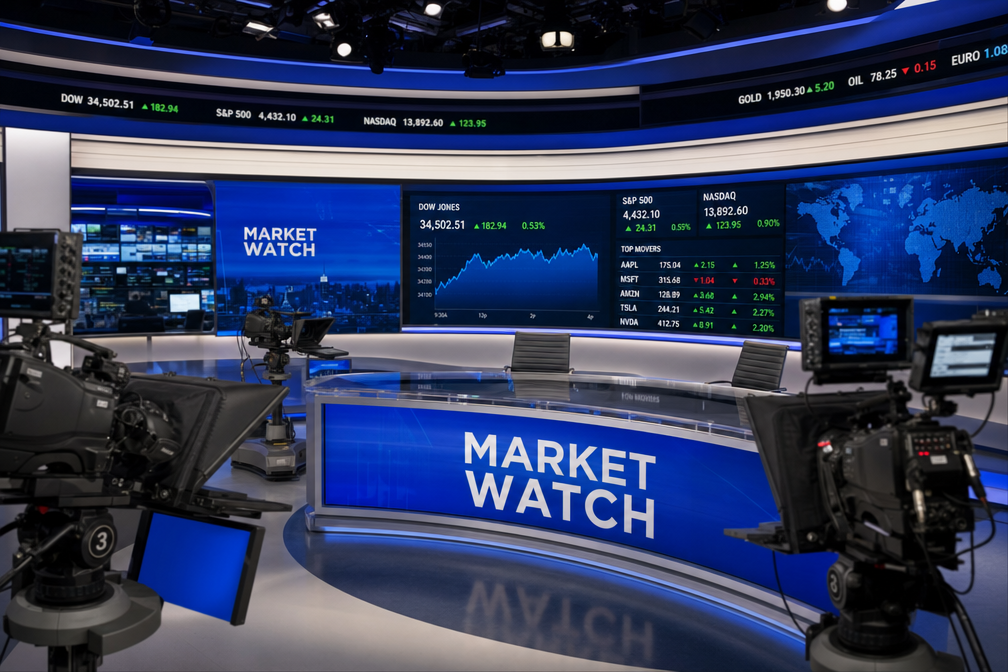

You want clarity in a noisy market. CNBC delivers it every trading day. The network reaches 355 million households across 160 countries, making it the most trusted source of financial intelligence worldwide. You get live stock quotes, commodity prices, currency updates, and expert analysis in real time. Hedge fund managers, policymakers, and retail investors rely on CNBC because it connects global markets with unmatched speed and depth.
What Exactly Is CNBC and Why Does It Matter to You?
CNBC stands for Consumer News and Business Channel. It launched in 1989 under NBC Universal. Today, it ranks as the most-watched business news network on the planet.
You get live stock quotes, real-time commodity prices, currency updates, and expert market analysis — all in one place. No other financial media brand covers global markets with the same speed and depth.
The network serves hedge fund managers, retail investors, economists, policymakers, and everyday people. Over 355 million households across 160 countries receive CNBC’s broadcast signal. That reach separates CNBC from every competitor in the financial media space.
How Has CNBC Evolved Into a Multi-Platform Powerhouse?
CNBC started as a cable news channel. Today, it operates across six major digital platforms. Each one serves a different kind of investor in a different context.
The main website at cnbc.com delivers breaking financial headlines, live market data, and earnings reports 24 hours a day. The CNBC app on iOS and Android gives you customizable stock watchlists, push alerts for market events, and live video streams at any hour.
CNBC Pro, the premium subscription tier, unlocks proprietary research, institutional-grade analysis, and actionable investment ideas. Serious investors call it one of the highest-value subscriptions in financial media. Beyond that, CNBC’s YouTube channels attract tens of millions of viewers every month with full-length episodes and rapid market recaps.
The shift happened because the modern investor changed. You check your phone at lunch, listen to podcasts on a commute, and scan headlines at midnight. CNBC followed you to every screen.
What Does CNBC’s Global Network Cover Across Six Continents?
CNBC operates one of the most extensive international networks in financial journalism. Each regional branch covers its local markets with dedicated reporters and live data feeds.
CNBC International anchors the global operation outside the United States. It broadcasts across Europe, the Middle East, and Asia. South Korea’s KOSPI crossed 9,000 for the first time in mid-2026 — CNBC International covered that milestone live.
CNBC Asia tracks the Nikkei, Hang Seng, and ASX indexes daily. It also covers the Bank of Japan, Reserve Bank of India, and People’s Bank of China. In June 2026, Squawk Box Asia hosted Solana President Lily Liu. She told CNBC that blockchain technology sits at the same stage the internet occupied in the 1970s — decades of infrastructure ahead before consumer breakthroughs arrive.
CNBC Africa covers 54 nations across the continent. Africa holds six of the world’s ten fastest-growing economies. The network tracks pan-African stock exchanges, foreign direct investment flows, and commodity exports including oil, gold, and platinum. Many Western outlets ignore this story. CNBC Africa covers it every day.
CNBC India broadcasts as CNBC-TV18 and CNBC Awaaz. India ranks as the world’s fifth-largest economy in 2026 and the fastest-growing major economy on Earth. The channel covers the NSE, BSE, Sensex, and RBI policy decisions for one of the world’s largest retail investor populations.
CNBC Indonesia serves a nation of 280 million people. Indonesia’s digital economy ranks among the fastest-expanding in Southeast Asia. The channel tracks the Jakarta IDX exchange, the Indonesian rupiah, and the country’s vast commodities sector.
CNBC-e connects European investors to ECB decisions, German industrial output, and post-Brexit UK trade data. Every market-moving event in the Eurozone runs through CNBC-e first.
Which CNBC Shows Should You Watch and Why?
CNBC’s flagship programs do something data feeds cannot do. They add human context to raw numbers. Each show targets a different investor type and a different moment in the trading day.
Squawk Box — Is This the Most Important Morning Show in Finance?
Squawk Box airs every weekday at 6 AM Eastern Time. It covers pre-market futures, breaking economic data, and live CEO interviews before the opening bell rings.
In 2026, the show became essential viewing because of one story: the Federal Reserve’s leadership transition. New Fed Chairman Kevin Warsh took the helm and delivered his debut FOMC decision in June 2026. Markets had expected an easy-money Fed. Warsh signaled the opposite — inflation remains the primary concern, and a rate hike in 2026 sits on the table.
The S&P 500 recorded its worst “Fed Day” performance under a new chairman since 1994. Squawk Box covered it live, hosting economists, fund managers, and strategists in real time. You could not get that level of depth anywhere else that morning.
Mad Money — Can Jim Cramer’s Stock Picks Actually Help You?
Mad Money airs weekday evenings on CNBC. Host Jim Cramer reviews individual stocks, dissects earnings reports, and delivers buy, sell, or hold verdicts in a format accessible to retail investors.
The show’s strength lies in accessibility. Cramer translates complex balance sheets and sector trends into direct, actionable language. He makes finance engage people who would otherwise ignore their portfolios entirely.
In mid-2026, Mad Money has focused on three major stories. Intel surged 9% in a single session after Trump announced a U.S. chip design partnership between Intel and Apple. Ford entered the AI battery sector. SpaceX completed an $85.7 billion IPO — one of the largest in financial history. Cramer covered all three with in-depth company analysis.
Closing Bell — What Actually Moved Markets Today?
Closing Bell airs as markets approach the 4 PM Eastern close. The show synthesizes the full trading day into a coherent narrative investors can act on tomorrow.
The 2026 theme dominating Closing Bell coverage is the “Great Rotation.” Capital moves out of the Magnificent 7 tech giants and Bitcoin. It flows into semiconductors, memory manufacturers, and space-related enterprises. The Nasdaq Composite fell 1.54% on May 15, 2026 as tech sold off and Treasury yields climbed. Closing Bell explained exactly why.
Fast Money — What Are Active Traders Doing Right Now?
Fast Money brings professional traders together for rapid-fire market analysis after the close. The format mirrors the actual conversation on institutional trading desks. You get raw market psychology, not polished commentary.
What Are the Biggest Stories CNBC Covers in June 2026?
Did the Federal Reserve Just Change Everything?
Kevin Warsh’s debut as Fed Chairman rattled markets across the board. His first FOMC meeting produced a clear message: inflation control takes priority over economic stimulus.
Bond markets reacted immediately. The 10-year Treasury yield climbed. Tech stocks sold off. Bitcoin fell. The S&P 500 shed 1.24% to close at 7,408.50 on May 15, 2026. The Dow Jones dropped 537 points that same session. Gundlach, the bond king, told CNBC bluntly — Warsh will not be the “easy money” chairman anyone hoped for.
His task force structure for Fed policy management is unconventional and closely watched. CNBC covers every signal from the new Fed leadership with dedicated analysis segments on Squawk Box, Closing Bell, and Fast Money daily.
Where Does Bitcoin Stand After Its Wild 2026 Ride?
Bitcoin reached near $80,000 earlier in 2026. Then the pressure arrived. Rising Treasury yields, hotter inflation data, and risk-off sentiment pushed Bitcoin below $60,000 in early June 2026 — its lowest level since October 2024.
The short-term pain obscures a structural transformation. BlackRock launched a staked Ethereum ETF in March 2026. Fidelity entered stablecoin reserve management. Coinbase now offers perpetual futures on SpaceX pre-IPO shares. Wall Street has adopted crypto as a legitimate asset class.
CNBC Crypto World broadcasts every weekday at 3 PM Eastern. It tracks Bitcoin, Ethereum, XRP, Solana, and the entire digital asset space with institutional precision. The show had 9 million total video views in Q1 2026 across platforms. Retail and institutional investors both tune in.
How Big Was the SpaceX IPO and What Does It Mean for You?
SpaceX raised $85.7 billion in its initial public offering — including the greenshoe overallotment option exercised by underwriters. That total places the SpaceX IPO among the largest in financial history.
CNBC broadcast the listing live from the Nasdaq floor. A SpaceX rocket model stood outside the exchange. Space-related stocks surged across 2026 as investors allocated capital toward satellite internet, launch services, and defense contracts. The capital rotation into aerospace and space infrastructure rivals the early internet investment wave of the 1990s.
What Does the Intel-Apple Chip Deal Mean for U.S. Technology?
Trump announced a landmark partnership between Intel and Apple in June 2026. Intel would handle chip design for Apple products manufactured in the United States. Intel shares surged 9% the day of the announcement.
CNBC’s tech reporters connected the dots immediately. The deal challenges TSMC’s dominance in advanced semiconductor production. It accelerates the U.S. reshoring agenda. It positions American chip manufacturing closer to the AI hardware supply chain. Advanced Micro Devices and Micron Technology both pulled back as investors processed the competitive implications.
How Did Iran and Hormuz Affect Oil Markets?
A U.S.-Iran diplomatic deal reached in June 2026 restructured Hormuz Strait administration between Iran, Oman, and Gulf states. Oil prices eased initially on the news. Stocks lifted briefly. Then the Federal Reserve’s hawkish signal reversed those gains.
CNBC connected every link in that chain for viewers. Geopolitical news → oil prices → inflation expectations → Fed policy → equity valuations → portfolio decisions. That analytical chain is the real product CNBC delivers.
How Can You Access CNBC’s Full Intelligence Network?
You have five direct access points to CNBC’s financial coverage in 2026.
cnbc.com serves as the primary hub for breaking financial news, market data, and long-form analysis. The site updates continuously throughout each trading session.
The CNBC App on iOS and Android gives you live streams, custom watchlists, and real-time price alerts. The app also gates CNBC Pro content for premium subscribers.
CNBC Pro is the subscription tier for serious investors. It delivers institutional research, exclusive interviews, and uninterrupted streaming. The data quality rivals Bloomberg at a fraction of the cost.
The Yahoo Finance CNBC Hub integrates CNBC editorial content directly into a portfolio dashboard. You read the news and track your positions in the same interface.
CNBC on YouTube offers free access to full episodes, market recaps, and international content across dedicated channels. The archive stretches back years and covers every major market event of the past decade.
Does CNBC Still Beat Social Media for Financial Intelligence?
Reddit threads move fast. Twitter/X stock tips trend daily. TikTok finance creators attract millions of followers. Yet none of them replace what CNBC delivers. The reason comes down to three fundamentals: access, accountability, and synthesis.
CNBC gets the interviews nobody else gets. When Kevin Warsh signals Fed policy, he does it on Squawk Box. When a CEO addresses institutional investors, they go on Closing Bell. That access has no social media equivalent.
Every CNBC analyst puts their name and reputation on record with every call. A viral Reddit post carries zero accountability. A CNBC interview with a company CFO moves real stock prices because it carries institutional credibility.
Social media gives you a fragment of the story. CNBC gives you the whole chain. Bitcoin drops 3% — you could see that on Twitter in seconds. Understanding why it dropped — Treasury yields, Fed language, risk rotation, technical levels — requires exactly the kind of synthesis CNBC produces daily.
In 2020, CNBC viewership spiked 50% during the March market crash. In 2022, it spiked again during the Federal Reserve’s rate hike cycle. Crisis moments prove which sources investors actually trust when real money is at stake.
What Is the Real Value of CNBC for Investors in 2026?
CNBC tracks more markets, covers more regions, and delivers more institutional-grade analysis than any competitor in financial media. Its reach spans 160 countries. Its shows dominate pre-market, intraday, and post-market financial conversation.
The network covers the Federal Reserve’s new leadership with daily expert analysis. It tracks Bitcoin’s institutional evolution from a live broadcast desk. It broke the SpaceX IPO story live from the Nasdaq floor. It connects geopolitics, oil prices, inflation, and equity valuations into one coherent daily narrative.
You can watch on television, stream on the app, read on cnbc.com, or tune in through CNBC Pro. Each platform delivers the same core product: clarity in a market full of noise.
The story of global finance unfolds every trading day. CNBC covers every chapter.
Final Thoughts
You want financial news that delivers clarity, speed, and credibility. CNBC provides all three. The network reaches 355 million households across 160 countries, making it the most trusted financial media brand in 2026. You get live market data, expert interviews, and actionable insights across television, web, mobile, and premium platforms. CNBC connects global markets into one coherent narrative investors can act on every day.
FAQs
What makes CNBC the most trusted financial network?
CNBC combines global reach, institutional-grade analysis, and exclusive access to CEOs, policymakers, and central bankers. Every broadcast carries accountability and credibility.
How many households does CNBC reach worldwide?
CNBC broadcasts to over 355 million households across 160 countries, making it the largest financial news network globally.
Which CNBC shows should investors follow daily?
Squawk Box, Closing Bell, Mad Money, Fast Money, and Crypto World dominate financial conversation across pre-market, intraday, and post-market sessions.
What major stories has CNBC covered in 2026?
Coverage includes Kevin Warsh’s debut as Fed Chairman, Bitcoin’s volatility, the $85.7B SpaceX IPO, Intel-Apple’s chip partnership, and the Iran-Hormuz oil deal.
How can you access CNBC’s content?
You can watch on TV, stream via the CNBC app, read on cnbc.com, subscribe to CNBC Pro, or follow dedicated YouTube channels.
Why does CNBC outperform social media for financial intelligence?
Social media offers fragments. CNBC delivers synthesis — connecting market moves to Fed policy, geopolitics, and investor psychology with institutional credibility.