
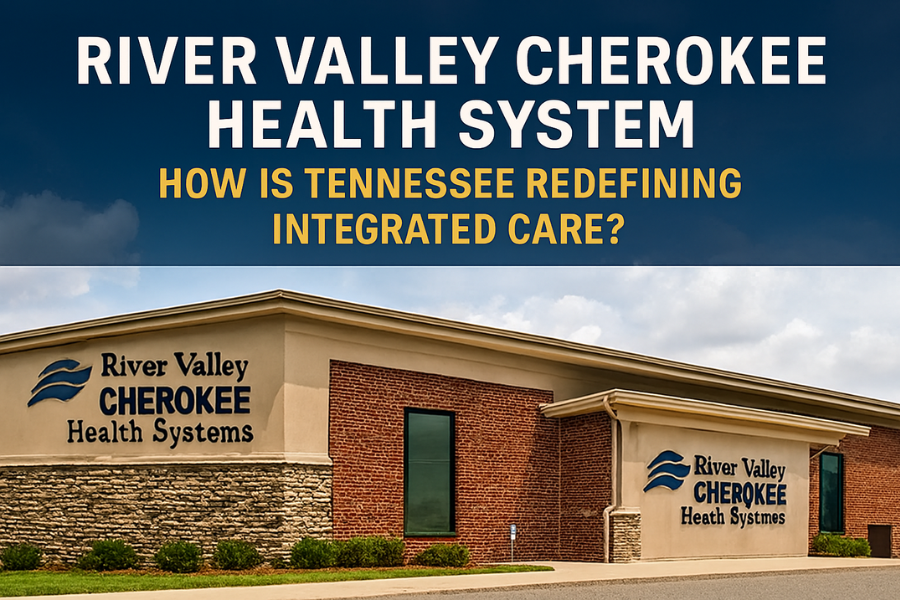

Healthcare in Tennessee has entered a new chapter with the rise of River Valley Health, the organization formerly known as Cherokee Health Systems. The rebrand in July 2025 reflects decades of progress, transforming a small mental health clinic in Morristown into a statewide leader in integrated, patient-centered care. Today, River Valley Health serves more than 70,000 patients each year through 20 clinics, two mobile units, and advanced telehealth services. The focus remains clear: deliver affordable, accessible, and comprehensive care that addresses both physical and mental health needs in one system.
Why Did Cherokee Health Systems Rebrand?
In July 2025, Cherokee Health Systems (CHS) rebranded as River Valley Health. The change marked the evolution of a small mental health clinic in Morristown into a statewide leader in integrated, patient-centered healthcare.
River Valley Health now serves over 70,000 patients annually. The network includes 20 clinics in 12 counties, two mobile health units, and a strong telehealth platform. The mission remains focused on accessibility, innovation, and whole-person care.
What Makes River Valley Health Different?
Integrated Care Model River Valley Health placed Behavioral Health Consultants (BHCs) inside primary care clinics. Patients receive physical and mental health support in one visit. Services cover chronic illness management, depression, anxiety, and lifestyle changes such as smoking cessation.
Comprehensive Services As an FQHC, River Valley Health offers a full spectrum of care:
- Primary care
- Behavioral and mental health
- Dental care
- Optometry
- On-site pharmacy
Affordable Access Patients benefit from a sliding fee scale. The system accepts TennCare (Medicaid), Medicare, and commercial insurance. A strong focus on health equity ensures underserved families receive care.
Extensive Network
- Headquarters: 2018 Western Ave, Knoxville, TN 37921
- Phone: 1-866-231-4477
- Additional centers: Blaine, East Knoxville, Talbott, and more across Tennessee.
How Does the Cherokee Model of Integration Work?
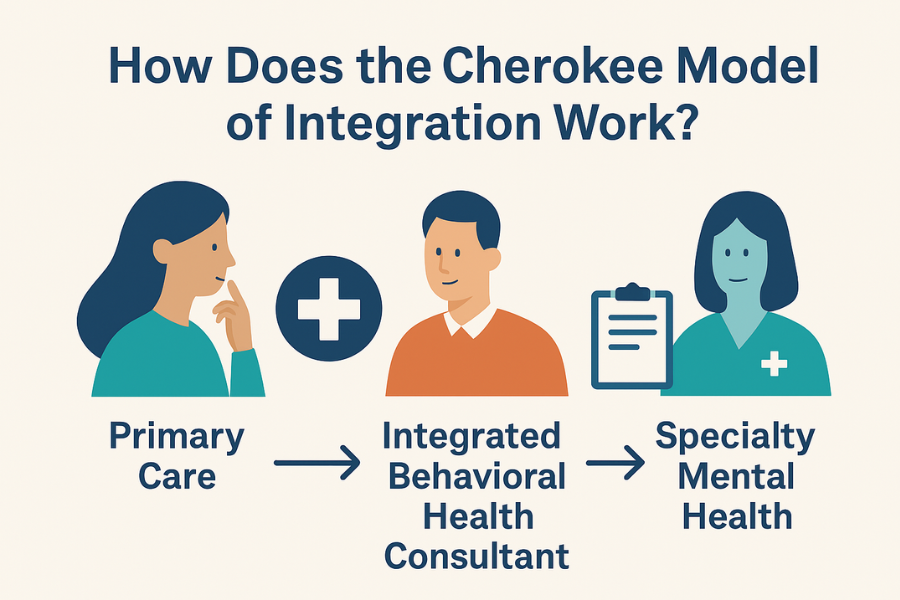
River Valley Health uses a dual-layered behavioral health system:
- Primary Care Behavioral Health Team: Delivers real-time consultation and intervention during primary care visits.
- Specialty Mental Health Clinic: Provides psychiatric consults, therapy, case management, and telemedicine follow-ups.
The two teams coordinate care seamlessly. Patients move between primary and specialty services without disruption. This closed-loop model prevents fragmentation and improves outcomes.
What Barriers Still Exist?
| Barrier | Description | Impact |
| Financing | Fee-for-service models discourage collaboration | Limits sustainability |
| Workforce | Providers trained in silos lack team-based skills | Creates shortages |
| Operational | Conflicting definitions of integration | Slows adoption |
CEO Dr. Parinda Khatri highlights the need for evidence-based refinements. She projects that the next decade will bring new research-driven models that strengthen integration.
How Is Research Driving Innovation?
River Valley Health and the University of Tennessee, Knoxville (UT) launched the Research and Education Aligned for Clinical and Community Health (REACCH) initiative.
- Focus Areas: Chronic cardiometabolic conditions, maternal health, relational health, substance misuse, food security, and literacy.
- Structure: Two interdisciplinary teams working for 16 months.
- Support: Each team receives $15,000 in seed funding and mentorship from CHS and UT leaders.
The program ensures River Valley Health remains a national leader in evidence-based, community-driven healthcare.
What Does the Future Hold?
The rebrand signals a commitment to the next era of healthcare:
- Expansion of integrated care across Tennessee.
- Broader use of telehealth and mobile units in rural areas.
- Development of a workforce trained in team-based, whole-person care.
- Research that directly improves patient outcomes.
Dr. Khatri states: “The coming years are going to be very exciting. We are defining the next generation of integrated care—making it more effective, more evidence-based, and more accessible than ever before.”
FAQs
What is River Valley Health?
River Valley Health is a Federally Qualified Health Center (FQHC) in Tennessee. It provides integrated healthcare that combines primary care, behavioral health, dental, optometry, and pharmacy services.
When did Cherokee Health Systems become River Valley Health?
The rebrand took place in July 2025. The change reflects the organization’s growth from a small mental health clinic in Morristown into a statewide healthcare leader.
How many patients does River Valley Health serve?
River Valley Health serves over 70,000 patients annually across 20 clinics in 12 counties, along with two mobile units and telehealth services.
What makes River Valley Health unique?
The organization pioneered an integrated care model. Behavioral Health Consultants (BHCs) work directly in primary care clinics, ensuring patients receive both physical and mental health support in one visit.
What services are available?
Patients can access:
- Primary care
- Behavioral and mental health
- Dental care
- Optometry
- On-site pharmacy services
Is care affordable at River Valley Health?
Yes. River Valley Health uses a sliding fee scale to make care affordable for low-income patients. It also accepts TennCare (Medicaid), Medicare, and commercial insurance.
Where is the main location?
The headquarters is located at: 2018 Western Ave, Knoxville, TN 37921 Phone: 1-866-231-4477
Does River Valley Health offer telehealth?
Yes. Patients can access care through telehealth services, which expand access for rural and underserved communities.
What research partnerships does River Valley Health have?
River Valley Health collaborates with the University of Tennessee, Knoxville through the REACCH initiative. The program funds research on chronic conditions, maternal health, substance misuse, food security, and literacy.
What challenges does River Valley Health face?
The main challenges include:
- Financing: Fee-for-service models discourage collaboration.
- Workforce: Providers often lack training for integrated care.
- Operations: Different definitions of integration create confusion.
What is the future vision of River Valley Health?
The organization plans to expand integrated care, strengthen telehealth, train a new workforce in team-based care, and advance research that improves patient outcomes.QuickFast — Deep dives. Fresh ideas. Fast delivery.


