
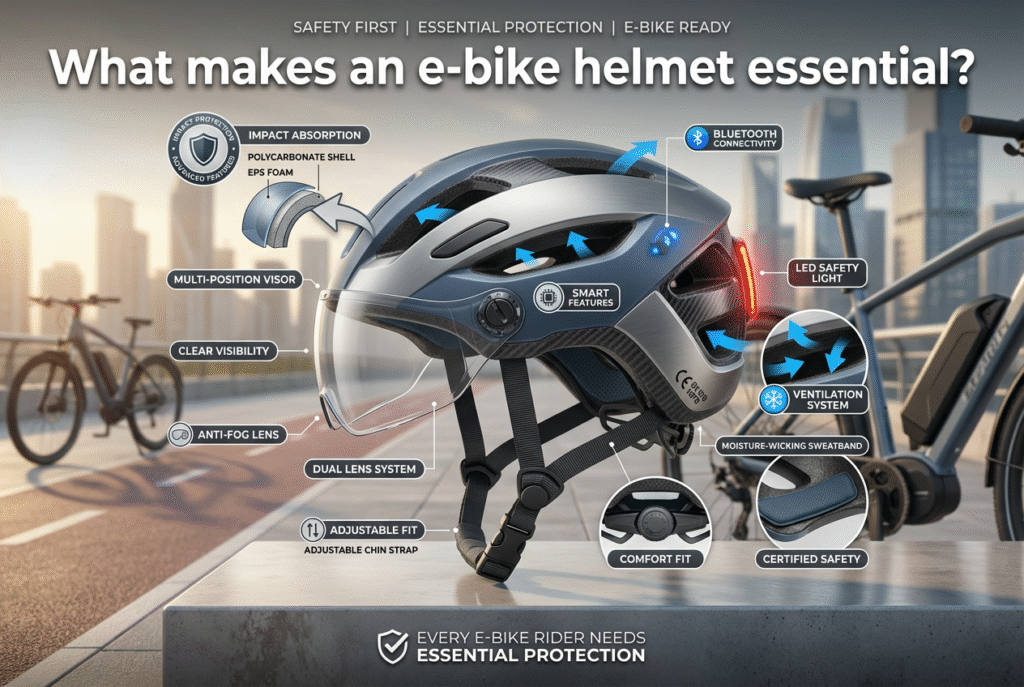

You ride faster. You share lanes with cars and buses. You want more protection. E‑bikes can reach 28 mph. Traditional bicycle helmets focus on impacts around 15.5 mph. You need a helmet that matches your speed and your routes. Do you want a safer commute and clearer visibility at night?
You cut commute time. Americans average about 30 minutes each way. You lower carbon emissions compared to gas cars. You still need strong protection at urban speeds. Do you want fewer risks and more confidence on every trip?
Which safety standards should you trust?
You see the CPSC label on every bike helmet sold in the USA. You get a baseline for impact protection. You confirm legal compliance out of the box.
You look for NTA 8776 certification for e‑bike speeds. The Dutch standard covers impacts at up to 28 mph. You get more coverage at the back and sides. Do you want standards that reflect how fast you actually ride?
You check rotational protection. You look for MIPS or WaveCel. You reduce the force of angled impacts to lower brain injury risk. Do you want better protection against real‑world crash dynamics?
Do helmet laws change by e‑bike class and state?
You choose a class that fits your rides. You check local rules before you head out. Laws vary by state and by class. Do you want a quick snapshot?
| Class | Top assist speed | Typical helmet rule |
|---|---|---|
| Class 1 | 20 mph | Often for minors; adults depend on state |
| Class 2 | 20 mph | Often similar to Class 1 |
| Class 3 | 28 mph | Often required for all riders |
You see no single federal helmet law. You review your state site before a purchase. Do you ride Class 3 in traffic most days?
Tip: Many states mandate helmets for Class 3 riders and minors across classes. Check your DMV or DOT portal for updates.
What features matter most for e‑bike helmets?
- Certification: Look for NTA 8776 plus CPSC.
- Rotational safety: Choose MIPS or WaveCel.
- Visibility: Pick front and rear LEDs and reflective zones.
- Shell strength: Favor ABS for urban knocks and high‑energy impacts.
- Fit system: Use a dial fit and multiple sizes.
- Vent control: Choose adjustable vents for heat or rain.
- Smart tech: Add turn signals, brake lights, and crash alerts.
You match features to your routes. Do you want turn signals for lane changes at night?
How does an e‑bike helmet differ from a regular bike helmet?
You get wider coverage at the temples and occipital area. You get testing aligned to higher speeds and heavier momentum. You see integrated lighting more often. You may feel a slight weight increase due to stronger shells and electronics. Do you want more coverage where impacts happen most in traffic?
Which e‑bike helmets stand out in the USA market?
- Giro Camden MIPS: Safety: NTA 8776 and MIPS. Features: Large rear light, adjustable vents, magnetic buckle. Fit: Secure and commuter‑ready. Do you want a feature‑rich urban helmet?
- Specialized Mode: Safety: NTA 8776 and MIPS. Features: Clean look, mount for Stix rear light. Value: Strong safety at a friendlier price. Do you want premium safety without premium cost?
- Bern Hudson MIPS: Safety: NTA 8776 and MIPS. Features: Rechargeable rear light, flip visor, enhanced side protection. Style: Urban commuter aesthetic. Do you want visor coverage for sun and rain?
- Unit 1 Faro: Safety: ABS shell and smart alerts. Features: App‑controlled lights, turn signals, crash detection. Note: Heavier at about 630 g. Do you want maximum visibility and connected features?
How do you pick the right fit and comfort?
You measure your head. You use a flexible tape around the largest part above the brows. You compare the number to the size chart. You size down if in between. Do you want a snug fit without hotspots?
You check weight for long commutes. You match vent count to your climate. You add a cap under the helmet for cold days. You look for anti‑theft loops and magnetic buckles for daily use. Do you want comfort that lasts an hour each way?
What should USA commuters consider before checkout?
- Route type: Label: Urban traffic or multi‑use paths. Choice: More lights and coverage for cars and buses.
- Ride speed: Label: Class 3 or brisk Class 1/2. Choice: NTA 8776 for 28 mph peace of mind.
- Night visibility: Label: Early or late rides. Choice: 360° LEDs plus reflective zones.
- Weather: Label: Heat, rain, or winter. Choice: Adjustable vents and water‑friendly shells.
- Tech needs: Label: Turn signals and crash alerts. Choice: Smart helmets for city navigation.
You match your helmet to your daily reality. Do you want safer merges and clearer signals to drivers?
Which keywords help you find the right helmet online?
- Primary: e‑bike helmet, NTA 8776 helmet, MIPS e‑bike helmet
- Secondary: Class 3 e‑bike helmet, electric bike helmet USA, best e‑bike helmet
- Legal intent: e‑bike helmet laws by state, CPSC bicycle helmet
- Feature intent: smart e‑bike helmet with lights, e‑bike helmet with visor, full face e‑bike helmet
- Local intent: e‑bike helmet near me, e‑bike helmet for commuters
You refine searches to your intent. Do you want Class 3 options with LEDs and MIPS?
What is the direct answer if you ride an e‑bike?
You choose a helmet with CPSC compliance and NTA 8776 when possible. You add MIPS or WaveCel. You pick strong visibility. You confirm your state rule for your e‑bike class. You ride safer at urban speeds. Do you want me to tailor picks to your budget and head size?
“QuickFast — Your Fast Track to the Stars”