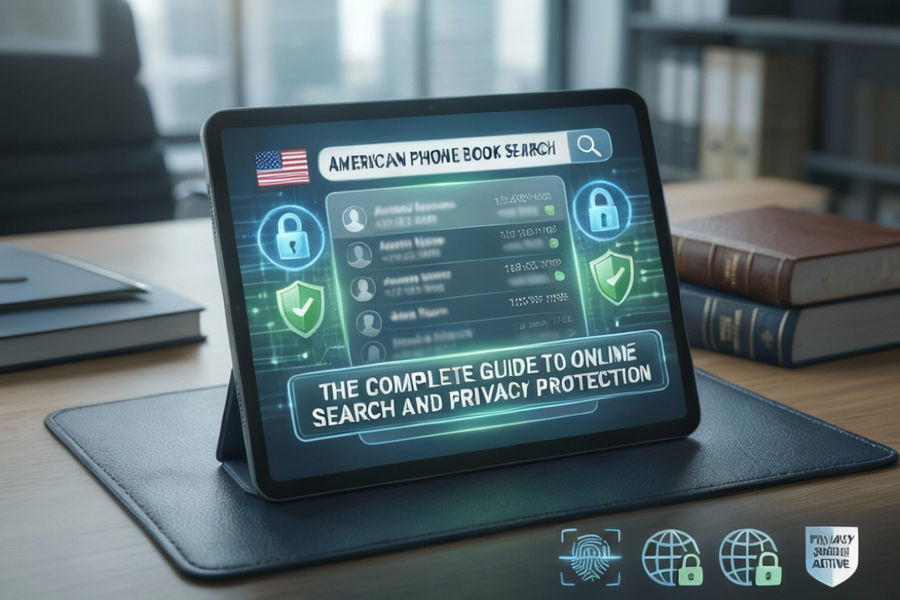

The American phone book has transformed over the past century. Once a household staple, printed phone books contained residential listings in the White Pages and business listings in the Yellow Pages. Today, most printed directories are obsolete, replaced by online databases and search engines.
At the same time, websites like AmericaPhoneBook.com act as data brokers, publishing personal information online. This dual meaning — history and modern privacy concerns — makes the American phone book both nostalgic and controversial.
What Is the American Phone Book?
- Historical definition: Printed directories published by phone companies, listing landline numbers and addresses.
- Modern definition: Online people‑search databases (e.g., AmericaPhoneBook.com, USPhoneBook, Whitepages) that aggregate personal data.
How Did the American Phone Book Begin?
- 1880s: Phone numbers introduced to replace operator‑connected calls.
- 1883: Yellow Pages invented when a printer used yellow paper for business listings.
- 20th century: Phone books became ubiquitous, delivered annually to homes and businesses.
- 2004 law: Cell phone numbers excluded from directories.
- 2010s: Most companies stopped printing physical books; White Pages and Yellow Pages moved online.
- 2022 survey: Over 70% of U.S. adults were wireless‑only, making printed phone books largely obsolete.
AmericaPhoneBook.com and Online Directories
AmericaPhoneBook.com is a data broker site that publishes personal information such as names, phone numbers, addresses, and relatives.
Opt‑Out Process
- Visit AmericaPhoneBook.com.
- Search for your profile using your name or phone number.
- Copy the ZIP code associated with your listing.
- Click “Contact Us” at the bottom of the page.
- Fill out the form with your phone number and ZIP code, then request removal.
- Listings are typically removed within 3 business days.
Other data brokers include Whitepages, Spokeo, BeenVerified, TruthFinder, Intelius, Fast People Search, and more. Opt‑out guides are widely available to help users protect privacy.
Benefits and Risks of the American Phone Book
Benefits
- Historical research: Old phone books are valuable for genealogy and local history.
- Business visibility: Yellow Pages helped small businesses reach customers.
- Modern convenience: Online directories allow quick reverse phone lookups.
Risks
- Privacy exposure: Online phone books publish sensitive personal data.
- Identity theft: Public listings can be exploited by scammers.
- Data broker networks: Information spreads across multiple sites.
FAQs
1. What is the American Phone Book?
The American phone book traditionally referred to printed directories containing residential listings in the White Pages and business listings in the Yellow Pages. Today, it often refers to online people‑searching databases such as AmericaPhoneBook.com, Whitepages, or USPhoneBook.
2. Is the American phone book still printed?
Most companies stopped printing physical phone books in the 2010s. The White Pages and Yellow Pages now exist primarily as online directories.
3. Can I access historical American phone books?
Yes. Libraries, archives, and genealogy websites often keep copies of old phone books. These are valuable for family history research and local historical studies.
4. Are cell phone numbers listed in the American phone book?
No. A 2004 U.S. law prohibits including cell phone numbers in public directories. Modern phone books only list landlines unless users voluntarily add mobile numbers to online databases.
5. What is AmericaPhoneBook.com??
AmericaPhoneBook.com is a data broker website that publishes personal information such as names, addresses, relatives, and phone numbers. It allows reverse phone lookups but raises privacy concerns.
6. How do I remove my information from AmericaPhoneBook.com??
You can opt out by:
- Visiting AmericaPhoneBook.com.
- Searching for your profile using name or phone number.
- Copying the ZIP code associated with your listing.
- Clicking “Contact Us” and filling out the removal form.
- Submitting the request — listings are usually removed within 3 business days.
7. What are the risks of online American phone books?
- Privacy exposure: Personal data is publicly accessible.
- Identity theft: Scammers may exploit published information.
- Data broker networks: Information spreads across multiple sites (e.g., Whitepages, Spokeo, BeenVerified).
8. What are alternatives to the American phone book today?
- Search engines (Google, Bing) for quick lookups.
- Online White Pages/Yellow Pages for business listings.
- People‑search services like Spokeo, TruthFinder, or Intelius.
- Social media platforms for personal connections.
9. Why is the American phone book important historically?
It was one of the earliest forms of public data collection and access, helping households and businesses connect before the internet era. The Yellow Pages became iconic for business advertising, while the White Pages documented residential communities.
10. How do I protect my privacy from online phone books?
- Regularly search for your name and phone number online.
- Use opt‑out forms on data broker sites.
- Consider paid privacy services that continuously remove your data.
- Limit sharing of personal information on public platforms.
Conclusion
The American phone book represents both a nostalgic piece of history and a modern privacy challenge. While printed directories like the White Pages and Yellow Pages shaped communication for decades, today’s online phone books raise concerns about data exposure and opt‑out processes. Understanding both the history and the current landscape ensures you can use these resources wisely — whether for research, business, or protecting your personal information.
Speedy coverage. Thoughtful perspective. Only on QuickFast