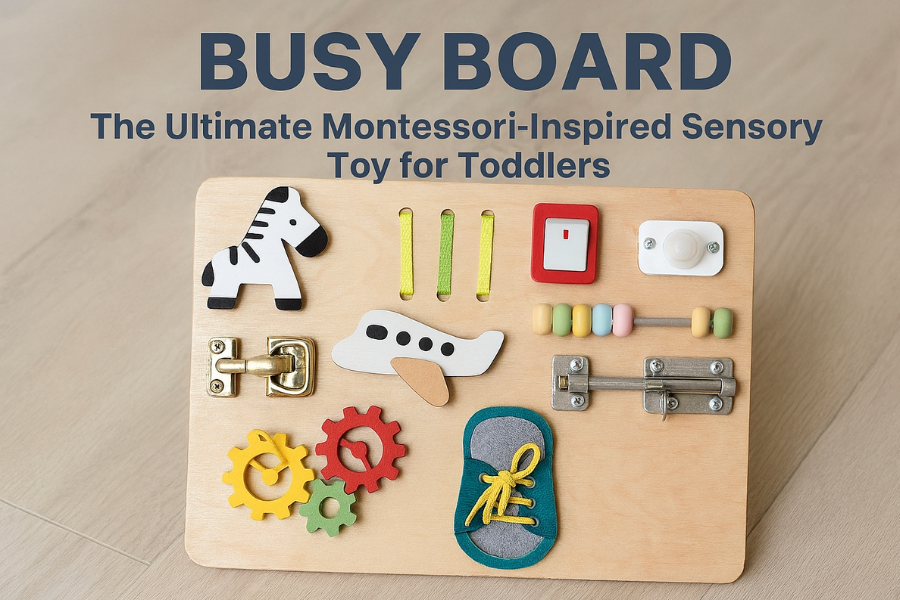

A busy board is more than just a toy—it’s a hands-on learning tool designed to nurture your child’s curiosity, independence, and developmental milestones. Whether you’re a parent looking to reduce screen time or a caregiver seeking Montessori-aligned activities, busy boards offer a safe, engaging, and educational solution for toddlers aged 6 months to 4 years.
What is a busy board and why does it matter?
A busy board is a flat panel fitted with everyday objects that a child can touch and explore. You get zippers, buckles, switches, locks, and gears on one board. You help your child build fine motor skills, hand-eye coordination, and problem-solving. You reduce screen time and boost independent play. Do you want a toy that teaches life skills and keeps your child engaged?
What ages suit a busy board?
You can offer a busy board to babies from about six months. Toddlers between one and four years gain the most from practical tasks such as buckles and laces. You can adapt to the complexity as your child grows. Do you want a board that grows with your child?
Where can you buy busy boards in the USA?
You can find ready-made boards on Amazon, Etsy, and Walmart. You can order Montessori-style boards from specialty stores and small craftsmen. You can compare prices from $20 to $120 depending on size, material, and complexity. Do you prefer a ready-made product or a custom board from a local maker?
How do safety rules affect your choice?
You must check for compliance with U.S. safety standards. You should look for CPSC guidance and ASTM test marks on products for small parts and chemical safety. You should avoid loose pieces that pose a choking hazard. Do you want a product that meets federal and state safety guidelines?
Why choose a Montessori busy board?
A Montessori board lets a child learn through hands-on exploration at their own pace. You see a focus on practical life skills such as zipping and buckling. You promote patience and self-confidence. Do you want a board that mirrors real household tasks?
Can you build a safe DIY busy board?
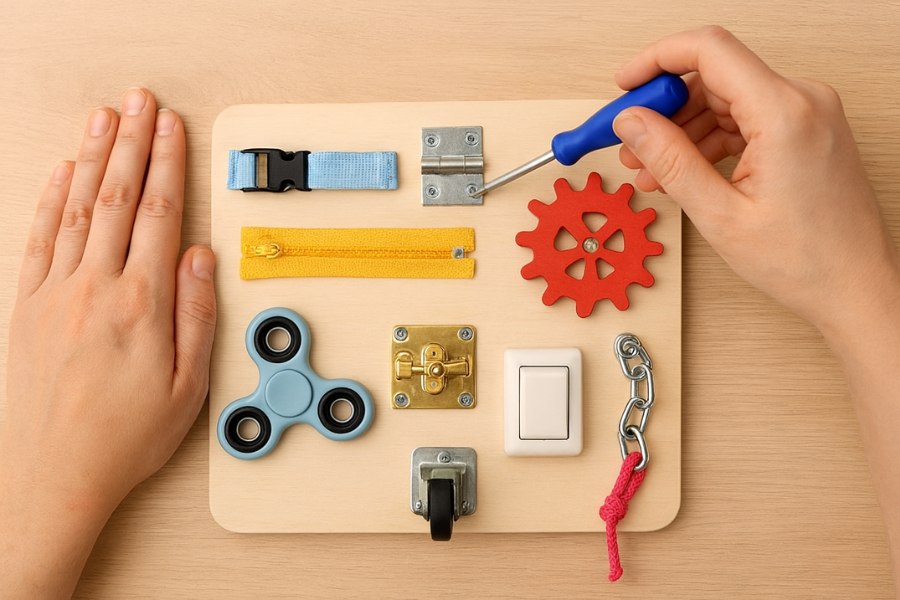
You can build a board with plywood, screws, and everyday hardware. You can select non-toxic paint and secure every item with screws or lock washers. You must remove sharp edges and test fastenings before play. You must keep all small parts out of reach for under-twos. Do you have the tools and time to craft one that meets safety checks?
What should you look for in a busy board for travel?
You should choose felt or soft-wood panels that weigh little. You should pick items that stay attached during motion. You should select easy-to-clean surfaces. Do you want a compact board that fits in a diaper bag or carries on a plane?
How do busy boards support development and daily routines?
You help build hand strength through buckles and laces. You help develop cause-and-effect thinking through switches and locks. You help your child practice dressing skills and simple repairs. You prepare your child for preschool tasks. Do you want a toy that blends play with practical life lessons?
What price range and retailer options should you consider?
You can buy entry-level fabric busy boards for about $20. You can invest in handcrafted wooden boards that range from $60 to $120. You can check local craft fairs for unique designs and support small businesses. Do you prefer budget options or heirloom pieces?
Which maintenance steps keep a busy board safe and fresh?
You should wipe surfaces with mild soap and water. You should tighten loose screws each month. You should replace worn or broken parts immediately. You should store the board in a dry place. Do you want a low-maintenance board that lasts for years?
What final question should you ask before you buy?
Do you want a busy board that matches your child’s age, skills, and family safety standards?
FAQs
What is a busy board?
A busy board is a flat panel fitted with everyday objects that a child can touch and manipulate to learn motor skills, cause and effect, and practical life tasks.
Who should use a busy board?
You can offer a busy board to babies from about six months. Toddlers from one to four years gain the most developmental benefit.
What skills does a busy board build?
You help your child develop fine motor skills, hand-eye coordination, problem solving, and dressing skills such as zipping and buckling.
How do I choose the right busy board for my child?
Match the board complexity to your child’s age and interest. Pick large, safe parts for babies and add locks, puzzles, or clocks as your child grows.
Are busy boards safe?
You must choose boards that meet safety standards and contain no loose small parts. You must use non-toxic paints and secure all fixtures tightly.
Can I make a DIY busy board?
Yes. You can use plywood or reinforced cardboard and household parts. You must remove sharp edges and test fastenings before you hand the board to a child.
How do I maintain and clean a busy board?
You wipe surfaces with mild soap and water and tighten screws monthly. You replace damaged parts immediately.
Where can I buy busy boards in Pakistan and the USA?
You can find ready-made boards on marketplaces such as Daraz and local toy shops in Pakistan. You can buy boards on Amazon, Etsy, Walmart, and from small craftsmen in the USA.
What price range should I expect?
You can find fabric travel boards from about $20 and wooden handcrafted boards from $60 to $120 in the USA. Prices in Pakistan usually range from PKR 2,750 for basic book-style boards to PKR 8,000 for larger interactive units.
How do I make a busy board travel friendly?
You choose felt or lightweight wood, pick parts that stay attached during movement, and ensure the surface cleans easily.
How often should I update or rotate board components?
You should review the board every few months. You should add or swap items to keep the challenge fresh and match your child’s new skills.
What makes a Montessori busy board different?
A Montessori board focuses on practical life tasks and lets a child learn at their own pace. You see an emphasis on independence, real-world skills, and self-correcting activities.
Get your news in a flash at QuickFast.