


Puppy yoga pairs a gentle, beginner-friendly yoga class with young puppies roaming freely among participants. You get light exercise, mood lift, and animal contact in one session. Organizers must make puppy welfare the top priority to protect health and development. Will you choose a class that publishes clear vet checks, rest rules, and handler ratios?
What is puppy yoga?
Puppy yoga pairs a gentle, beginner yoga class with young puppies roaming among participants. You get light exercise, social contact, and animal interaction in the same session. Organizers must keep animal welfare as the top priority.
How does a responsible session run?
- Venue setup: Clean studio space, calm lighting, and a quiet rest room for puppies.
- Puppy selection: Puppies aged 8–16 weeks after a vet health check.
- Class format: Short yoga block, then supervised free time for play and rest.
- Supervision: At least one trained animal handler per small puppy group plus an experienced instructor.
- Safety actions: Handlers remove any puppy that shows stress; staff enforce hygiene and gentle handling rules.
Why does puppy yoga help people?
You get stress relief through human-animal contact. You get a mood boost from oxytocin release after safe pet interaction. You get motivation to join a class that might otherwise feel intimidating. You get social moments that help you meet others.
What do puppies gain when programs do things right?
Puppies receive early social exposure that builds confidence. Puppies learn calm responses to people and new environments. Puppies gain short, supervised exercise and positive human contact that support future training.
Where do most problems come from?
Large classes create noise and overstimulation that exhaust puppies. Early separation from the mother before eight weeks harms development. Poor hygiene increases disease risk for pups and attendees. Programs that focus on profit over care treat puppies as props rather than animals.
What health and welfare rules should you require?
- Age rule: Puppies must be at least 8 weeks old.
- Vet rule: Each puppy must have a recent health screening and appropriate vaccinations or vet clearance.
- Rest rule: Puppies must have scheduled quiet periods and access to water and a sheltered rest area.
- Ratio rule: Maintain one handler per small puppy group; allow immediate removal for stressed pups.
- Time rule: Limit event hours per puppy and avoid back-to-back appearances.
How should organizers publish policies?
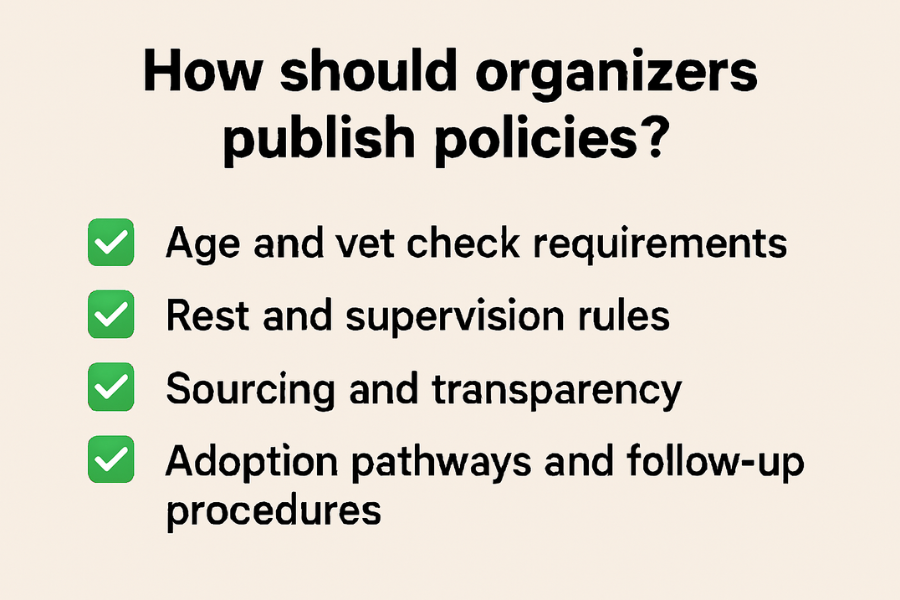
Post clear statements about puppy age, vet checks, maximum class size, rest schedules, and adoption steps. Share documentation about breeders, rescue, or foster partners. Offer a visible welfare contact who can answer attendee questions.
How many participants is safe per class?
Cap classes so each puppy has space to move and a quiet corner. Smaller groups reduce stress and allow handlers to watch body language closely. Aim for no more than 8–12 participants per litter-sized group, adjusted by venue size and number of handlers.
What hygiene steps protect people and puppies?
Provide hand-wash stations or sanitizer at the entrance. Clean mats and floors between sessions. Ask attendees to avoid bringing food or personal pets into the session. Post clear rules about nip-safe touching and face contact.
Can puppies be offered for adoption at events?
Yes when adoption follows standard screening and home-check processes. You should avoid pressuring attendees to adopt on the spot. You should provide a formal application and follow-up process after the event.
Are there safer alternatives to puppy yoga?
- Therapy-dog sessions with certified adult dogs reduce risk and support public programs.
- Shelter meet-and-greets give pups structured exposure and prioritize rehoming.
- Small socialization sessions at rescue or foster homes focus solely on puppy development.
- Animal-free mindfulness sessions provide similar stress relief without involving animals.
How often can a puppy safely attend an event?
Limit attendance to allow full rest days between events. Track each puppy’s exposure and note any stress signs. Rotate litters so no single puppy works too often.
How should you choose a provider?
Ask these questions: Do you require vet checks? Do you limit class size? Do you publish rest and transport rules? Do you work with accredited rescues or ethical breeders? Do handlers have credentials? Choose only providers that answer each question clearly.
What should an organizer checklist include?
- Confirm vet checks and vaccination status.
- Verify handler credentials and ratios.
- Set age limits and maximum hours per puppy.
- Prepare a quiet rest area and transport plan.
- Publish hygiene rules and participant waiver.
- Track behaviour and health after each session.
What final steps protect puppies and participants?
Make welfare the decision rule at every step. Report any welfare concern to the partner rescue or vet immediately. Train staff to read puppy body language and to act fast. Keep transparency with attendees and partners at all times.
FAQs
What happens in a typical puppy yoga class?
A short gentle yoga block comes first. You follow simple poses while puppies roam. Handlers monitor interactions. A supervised cuddle period follows where puppies can rest or play.
How old must the puppies be?
Puppies should be at least eight weeks old. You should avoid classes that use younger pups. Age matters for health and social development.
How do I know a class is safe?
Look for published vet checks, handler credentials, breed or rescue partners, and rest schedules. Ask about vaccination and parasite control. Choose transparency.
How many people should attend per class?
Keep groups small. Aim for controlled numbers so puppies have space and quiet corners. Ask the organizer about their exact cap before you book.
Can I adopt a puppy at the event?
You can if the organizer follows formal adoption screening and follow-up. You should not feel pressured to decide on the spot.
What hygiene rules apply?
Use hand sanitizer or wash hands before and after contact. Avoid bringing food or personal pets. Expect surface cleaning between sessions.
Are children allowed?
Children can attend under close supervision. Handlers must brief children on gentle handling. You should confirm age rules with the organizer.
How often can a puppy attend events?
Limit each puppy’s attendance. Rotate litters and schedule rest days. Track behaviour and health after each session.
What are safer alternatives?
Try sessions with certified adult therapy dogs. Try shelter meet-and-greets or focused socialization at foster homes. Try animal-free mindfulness or gentle yoga if you prefer no animals.
Your daily dose of quick reads and fast insights — QuickFast.