

A Corporate Software Inspector is both a product category and a professional role focused on discovering, assessing, remediating, and documenting risks in an organization’s software estate. This guide unifies both perspectives into a single, practical playbook you can use to build a resilient software-inspection capability that prevents breaches, reduces licensing waste, and ensures regulatory compliance.
What is a Corporate Software Inspector?
A Corporate Software Inspector combines a product and a professional role that reduces software risk across an enterprise. A product scans endpoints, inventories applications, maps vulnerabilities, delivers tested patches for non-Microsoft software, and verifies remediation. A professional audits licenses, validates security posture, evaluates vendor risk, and enforces software governance. You benefit when product automation and human judgment work together to stop breaches, cut waste, and prove compliance.
Why should you add a Corporate Software Inspector to your team?
You face fines and reputational loss when software breaks compliance or suffers a breach. Around 80% of breaches exploit known vulnerabilities that organizations failed to remediate. You lose money when unused licenses and shadow IT multiply procurement costs; studies show typical license waste around 20–30%. You gain resilience when someone owns inventory accuracy, vulnerability prioritization, and audit evidence.
What core responsibilities will the inspector perform?
Inventory all endpoints, servers, containers, and cloud assets. Map vulnerabilities and assign business impact scores. Package and deploy patches with rollback plans. Reconcile entitlements against usage and contracts. Assess vendor security posture and supply‑chain risk. Create procurement and retirement policies and maintain proof for auditors. Translate technical findings into business risk for leaders.
What technical and soft skills should you require?
Technical skills: endpoint discovery, vulnerability triage, patch-system integration, cloud fundamentals, and basic scripting. Security skills: threat modeling, exploitability assessment, and incident response procedures. Compliance skills: license models, privacy law basics, and contractual controls. Soft skills: clear reports, stakeholder negotiation, and training delivery. You achieve the best results when one inspector pairs with a patch engineer, a license manager, and a governance lead.
How does a Corporate Software Inspector operate step by step?
Define scope and measurable success metrics such as time-to-detect and patch rate. Run a baseline discovery across all environments and feed results into a canonical inventory. Enrich the inventory with vulnerability severity, exploitability, and critical business impact. Create a prioritized remediation plan that splits work into waves: critical patches, high-exposure licenses, high-risk third-party components. Integrate patch deployment with SCCM, MDM, or orchestration to automate safe windows and rollbacks. Rescan after every remediation and store time-stamped evidence for auditors. Lock procurement gates into onboarding and change-management processes. Review KPIs monthly and update the control set when new threats appear.
What should you achieve in the first 30, 60 & 90 days?
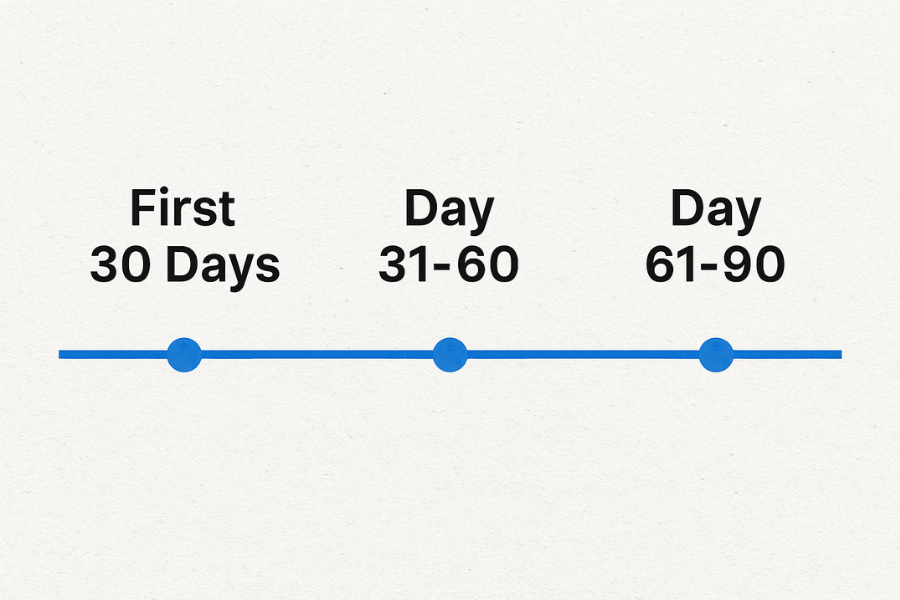
First 30 days: complete discovery; build a top-1000 app inventory; detect critical CVEs; publish KPIs. Day 31–60: deploy critical patches; reconcile top license gaps; author deployment and rollback playbooks. Day 61–90: add executive dashboards to leadership reviews; enforce procurement gating; automate rescans and alerting.
What KPIs will show progress?
Time to detect vulnerabilities. Time to remediate critical patches. Percentage of assets compliant with the baseline. License utilization variance versus entitlement. Number of high‑severity findings open past SLA. Audit readiness score tied to evidence completeness.
What tools and integrations enable inspection?
Endpoint agents and network scans for canonical discovery. CVE feeds and commercial vulnerability databases for threat intelligence. SCCM, WSUS, MDM, or orchestration for patch distribution and rollback. Software asset management (SAM) tools and CMDB for license reconciliation. SIEM and compliance dashboards for verification and reporting. Automation playbooks to reduce manual toil and shorten SLAs.
What common challenges will you face and how can you fix them?
Resistance from business teams: present impact in dollars and downtime, set low‑friction deployment windows, and assign clear SLAs. Fragmented tooling: consolidate to a single inventory source of truth and enforce integration standards. Regulatory complexity across regions: create a controls matrix that maps rules to regions and systems. Limited staff or budget: prioritize by risk and automate repeatable tasks first.
What questions should you ask before hiring or buying?
Which assets and geographies will fall inside scope? How will you measure remediation success in the first 90 days? Which vendor integrations exist for your current SCCM, MDM, or cloud platform? How will you prove remediation to auditors with time‑stamped evidence? Who will own procurement gates and policy enforcement?
How will a mature capability change your risk profile?
You reduce exploit windows when you shorten time to detect and remediate. You cut licensing spend through continuous reconciliation. You increase operational uptime by retiring unsupported software and enforcing update policies. You strengthen vendor oversight and reduce supply‑chain surprises. You harden board-level reporting with audit‑ready evidence.
What are the immediate next steps you can take?
Run a discovery scan to create a canonical inventory within 30 days. Prioritize critical CVEs and deploy the first remediation wave. Set up automated rescans and a simple executive dashboard. Build procurement gates and a license reconciliation cadence.
FAQ
Is Corporate Software Inspector a single product or a program?
It is both: products provide automation; the inspector role executes governance and interpretation.
How often should scanning occur?
Continuous discovery with weekly vulnerability triage and monthly full-audit cycles.
Can small businesses adopt this?
Yes; start with inventory and basic patching, then expand policies as you grow.
How to prove remediation to auditors?
Keep automated rescans, time-stamped patch logs, and signed change records.
Your daily dose of quick reads and fast insights — QuickFast.