
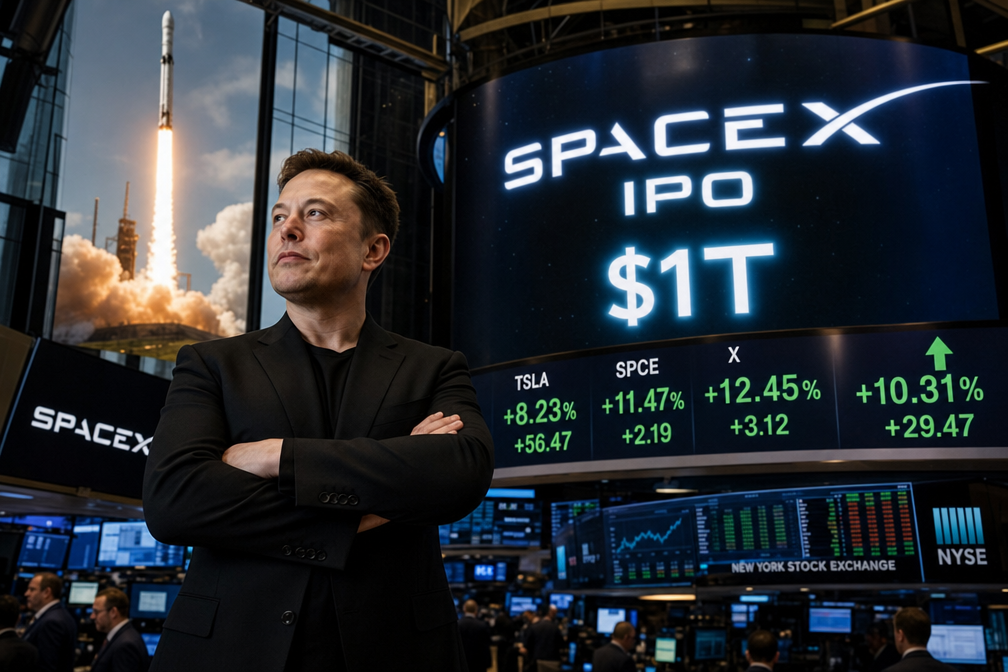

SpaceX’s Nasdaq debut vaulted Elon Musk past $1 trillion in combined holdings and sent global markets higher while oil fell on easing Iran tensions; you should track SPCX order flow, retail volume, and geopolitical headlines for the next 1–4 weeks.
What happened and why does it matter?
- What occurred? SpaceX listed as SPCX, opened at $150, and closed near $161, a +19% first‑day move.
- What that means for Musk. Elon Musk’s combined stake in SpaceX and Tesla now values him at about $1.05 trillion.
- What drove markets. U.S. diplomatic signals on Iran eased risk. Equities moved higher and energy prices fell.
How did the IPO perform on key metrics?
| Metric | Value | Why it matters |
| IPO price | $135 per share | Sets base for retail and institutional gains. |
| Capital raised | $75 billion | Largest IPO proceeds in history; shifts capital flows. |
| First‑day volume | ~500 million shares | Signals heavy retail participation and liquidity. |
| Market cap at close | ~$2.1 trillion | Places SpaceX among top global companies. |
What should you watch next?
- Will retail selling appear? Watch SPCX order imbalance and block trades.
- Will analysts change ratings? Expect rapid coverage and mixed views on the $28.5 trillion TAM claim.
- Will geopolitics reverse sentiment? Any setback on Iran talks can lift oil and cut risk appetite.
What action can you take now?
- If you trade: Use tight stops and size positions to limit downside. Monitor intraday liquidity.
- If you invest: Evaluate SpaceX exposure inside a diversified tech/space allocation. Check profitability of Starlink and the company’s $41.3 billion cumulative loss noted in filings.
- If you follow crypto: Watch macro liquidity and regulatory headlines. Ask yourself how much volatility you can accept.
What are the main risks and trade‑offs?
- Valuation stretch. High first‑day gains can reverse.
- Geopolitical fragility. Peace signals can change quickly and shift oil and equity moves.
- Concentration risk. Musk’s large stake concentrates influence and market reaction.
Which queries should you run next?
- “SPCX live order flow and block trades”
- “SpaceX prospectus cumulative losses and Starlink revenue”
- “Iran diplomatic deal market reaction Brent crude price”
Would you like a one‑page brief tailored to Pakistani investors with rupee impact, local brokerage notes, and tax points, Kairo?
What are the final thoughts
SpaceX’s IPO changed market dynamics. You saw a strong retail push and heavy liquidity. Expect higher volatility over the next 1–4 weeks.
Key fact: SPCX rose about +19% on debut and pushed Elon Musk’s combined holdings past $1 trillion.
Risk and reward sit close together. You must size positions and set stops. You must watch order flow and analyst notes.
Key fact: Global equities rallied 2–3% after easing Iran signals while Brent crude fell to its lowest level since March.
Sector rotation will follow headline moves. Tech and space stocks may lead early. Energy and defensive names may lag until geopolitics firm.
Key fact: First‑day SPCX volume reached roughly 500 million shares and the IPO raised about $75 billion.
What should you do next
You should define a clear plan. Ask yourself about time horizon and risk tolerance. Use staggered entries if you trade crypto or SPCX.
Key fact: SpaceX closed near a $2.1 trillion market cap on debut.
You should monitor three data points daily. Watch order imbalances, block trades, and geopolitical headlines. Check analyst revisions and lockup schedules.
You should avoid oversized bets that hinge on one headline.
What are the top FAQs
What caused the market rally
Easing diplomatic signals reduced risk premia. The SpaceX IPO added risk appetite and retail demand. Markets reacted to both forces.
How long can the rally last
Short windows often follow big IPOs. Momentum can last days to weeks. You should watch liquidity and news flow.
Should you buy SPCX now
You should assess valuation and your time frame. Consider partial exposure and set stop limits. Ask your broker about tax and settlement rules.
How will oil react if talks fail
Oil will likely rise on renewed risk. Energy stocks may recover quickly. You should hedge exposure if you hold cyclicals.
How should crypto investors act
You should size positions and use staggered buys. You should set clear exit rules. Expect high swings tied to macro liquidity.
Where can you get live updates
Use reliable market feeds and brokerage platforms. Follow order flow and official filings. Check analyst notes for valuation context.
What final checks should you run
You should verify prospectus figures before allocating capital. You should confirm local tax rules and currency effects if you invest from Pakistan.
You should review margin rules and settlement timelines with your broker.
Explore fast-moving insights, trending technology, business updates, and practical digital guides designed for modern readers at QuickFast.