
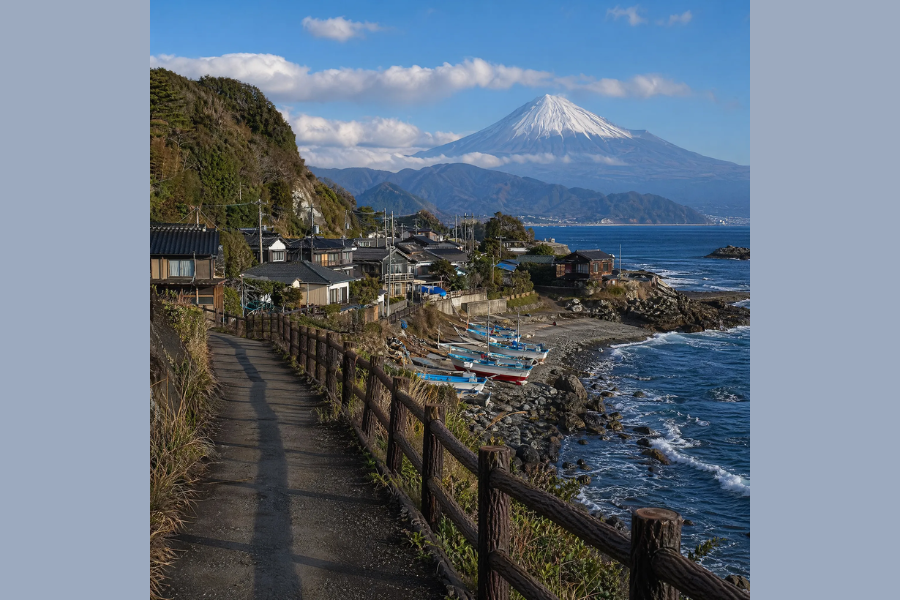

Nummazaki in Shizuoka Prefecture gives you a rare chance to see coastal Japan without crowds or commercial distractions. You stand on cliffs above Suruga Bay, watch Mount Fuji rise across the horizon, and walk through fishing villages that still follow rhythms set centuries ago. Fresh seafood reaches your plate within hours of being caught, shrines host lantern-lit ceremonies tied to the sea, and nearby hot springs complete the experience with mineral-rich waters. Why settle for tourist-packed resorts when you can explore a destination that offers solitude, authenticity, and direct connection to Japan’s natural and cultural heritage?
Where Is Nummazaki Located?
Nummazaki sits south of Numazu City along Suruga Bay in Shizuoka Prefecture. The area lies between the Pacific coastline and nearby mountain ranges. On clear days, you see Mount Fuji’s silhouette across the water.
Travelers reach Nummazaki in under two hours from Tokyo by Shinkansen and local train. From Shizuoka City, the trip takes about 40 minutes. The compact layout makes navigation simple even for first-time visitors.
What Makes the Coastline Special?
Nummazaki’s coastline features clifftop trails carved by centuries of erosion.
- Trails range from 30-minute walks to half-day hikes.
- Observation points provide panoramic views across Suruga Bay.
- Pebble beaches and tide pools offer quiet exploration.
Sunrise paints the bay in golden light. Sunset casts amber and rose tones across the water. Photographers return season after season to capture these moments.
How Rich Is Suruga Bay’s Marine Life?
Suruga Bay is Japan’s deepest bay at 2,500 meters. It supports over 1,000 marine species due to tectonic subduction zones.
- Dolphin tours run reliably between May and October.
- Snorkeling in hidden coves is popular in summer.
- Shore-based wildlife spotting includes seabirds and migratory species.
The contrast between calm surface waters and extreme depths makes Suruga Bay one of Japan’s most fascinating ecosystems.
What Happens in Nummazaki’s Fishing Villages?
Fishing villages along the coast operate on rhythms unchanged for generations.
- Boats leave before dawn and return with the morning tide.
- Fishermen unload crates packed with fresh catch by sunrise.
- By mid-morning, the same fish appear in local restaurants.
You eat kaisendon bowls layered with seasonal catches, sashimi prepared hours after harvest, and grilled fish served with local vegetables. Morning fish markets and harbor vendors add street food options like skewered seafood and traditional sweets.
What Is the Spiritual Heritage of Nummazaki?
Shrines and temples sit on cliffs and forested hillsides. They remain active spiritual spaces, not tourist attractions.
- Lantern-lit processions tied to maritime traditions
- Blessing ceremonies for fishing fleets
- Seasonal rituals performed for the community
Walking through torii gates while fishing boats move below creates a quiet atmosphere that feels deeply restorative.
Can You Experience Onsen Near Nummazaki?
Yes. The Izu Peninsula south of Nummazaki is one of Japan’s most celebrated hot spring regions.
- Shuzenji Onsen: 1,200 years old, bamboo-lined valley, meditative atmosphere
- Numazu Onsen: Ocean-view baths with Mount Fuji sightlines
- Heda Onsen: Sulfate springs with mountain and sea views at dusk
After hiking and seafood feasting, soaking in mineral-rich waters completes the coastal experience.
When Is the Best Time to Visit Nummazaki?
| Season | Conditions | Best For |
| Spring (Mar–May) | Mild, cherry blossoms | Hiking, Fuji views |
| Summer (Jun–Aug) | Warm, marine activity | Snorkeling, dolphin tours |
| Autumn (Sep–Nov) | Cool, foliage | Wildlife, fishing villages |
| Winter (Dec–Feb) | Cold, clear skies | Fuji visibility, solitude |
Winter mornings deliver the sharpest Mount Fuji views. Summer suits marine exploration. Spring and autumn balance hiking conditions with cultural festivals.
Why Does Nummazaki Stand Apart?
Nummazaki lacks crowds, commercial resorts, and staged performances. The highlights center on natural coastal geography and living fishing culture. You experience Japan on its own terms — cliffs, seafood, shrines, and hot springs without tourist packaging.
FAQs
What is Nummazaki famous for?
Clifftop trails, Suruga Bay marine life, traditional fishing villages, and fresh seafood culture.
Is Nummazaki suitable for solo travelers?
Yes. The compact layout, clear trail signage, and welcoming guesthouses make it ideal for solo exploration.
How many days are enough?
1–2 days cover coastal walks and harbors. 3 days allow deeper hikes, village visits, and onsen experiences.
What food should you try?
Sashimi, kaisendon, grilled fish, and harbor street food.
When is the best time to see Mount Fuji?
Winter mornings (Dec–Feb) and spring mornings before haze builds.
Final Takeaway
Nummazaki offers authentic Japan beyond Tokyo and Kyoto. You stand on windswept cliffs, eat fish caught that morning, and watch rituals that have continued for centuries. For travelers seeking honesty over performance, Nummazaki is one of Japan’s most rewarding destinations.
QuickFast delivers fast, practical.