
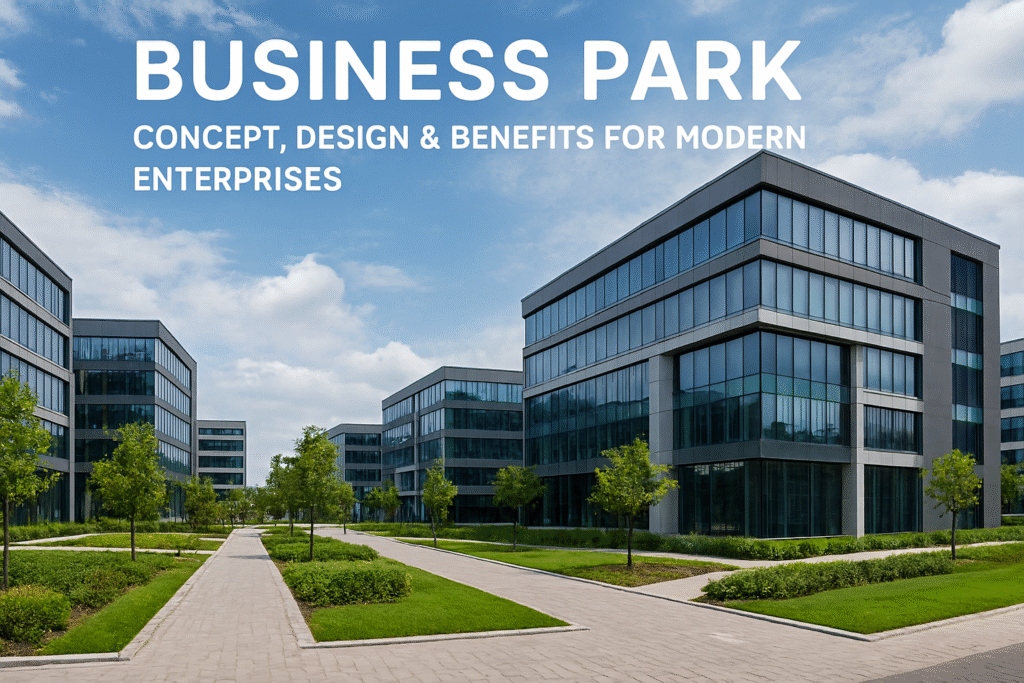

A business park is a planned commercial zone that brings multiple enterprises together in one location. You will find office buildings, warehouses, research centers, and retail outlets grouped in the same park, creating a hub of economic activity. Companies choose business parks because they provide modern infrastructure, shared resources, and convenient access to transport networks.
Business parks first appeared in the mid‑20th century and quickly gained popularity in suburban regions. They remain vital today for industries such as technology, finance, logistics, and manufacturing. Cushman & Wakefield reports that suburban office parks account for a significant share of global commercial real estate, which highlights their role in business expansion and relocation strategies.
Locating in a business park gives you clear advantages. Reliable utilities, high‑speed internet, and strong security systems support daily operations. Networking opportunities with nearby firms strengthen collaboration. Modern designs now integrate green spaces, housing, and public transport links, making business parks more attractive for employees and employers alike.
What Is the Concept of a Business Park?
A business park is a planned zone that hosts multiple enterprises in one location. It combines office complexes, warehouses, retail outlets, and sometimes light manufacturing facilities. The purpose is to provide shared infrastructure, modern amenities, and a collaborative environment.
According to the International Council of Shopping Centers, suburban business parks account for over 30% of commercial office space in developed countries, which highlights their global importance.
What’s in a Business Park?
You will usually find:
- Office buildings for corporate headquarters.
- Warehouses and logistics hubs.
- Retail outlets and service providers.
- Shared facilities such as parking, conference halls, and security systems.
- Landscaped open spaces that improve employee well‑being.
What Is the Use of a Business Park?
Business parks serve clear purposes:
- Provide affordable and scalable space for companies.
- Offer networking opportunities by clustering related industries.
- Improve efficiency with shared resources like high‑speed internet and meeting rooms.
- Attract talent by locating near skilled workforce hubs.
What Is the Difference Between IT Park and Business Park?
- IT Park: Focuses on technology companies, software development, and IT services.
- Business Park: Hosts diverse industries including finance, logistics, retail, and manufacturing.
IT parks are specialized, while business parks are multi‑sector ecosystems.
What Are Business Park Examples Around the World?
- Norwest Business Park (Sydney, Australia) – 172 hectares, home to 400+ companies.
- Mountain Brook Office Park (Alabama, USA) – The first modern office park, opened in 1955.
- Emeryville Innovation Ecosystem (California, USA) – Integrated with UC Berkeley, combining academia and enterprise.
What Is a Business Park in Geography?
In geography, a business park is classified as a planned suburban land use zone. It differs from central business districts because it is located on the outskirts of cities, with large plots of land, low‑rise buildings, and easy highway access.
How Does Business Park Design Work?
Modern design emphasizes:
- Sustainable architecture with energy‑efficient buildings.
- Walkable streets and landscaped green areas.
- Integration of housing, retail, and leisure facilities.
- Smart infrastructure such as fiber‑optic internet and renewable energy systems.
Why Does Business Park Location Matter?
Location determines accessibility for employees, clients, and suppliers. Companies should evaluate:
- Proximity to highways and public transport.
- Access to airports and logistics hubs.
- Availability of skilled labor in nearby communities.
- Local amenities such as restaurants, gyms, and schools.
What Is the Difference Between a Business Park and an Industrial Park?
- Business Park: Focused on offices, services, and light commercial activity.
- Industrial Park: Dedicated to heavy manufacturing, factories, and large‑scale logistics.
Business parks are more employee‑friendly, while industrial parks prioritize production capacity.
What Are Business Park Building Features?
Buildings in business parks often include:
- Flexible office layouts.
- High‑speed internet and advanced telecom systems.
- Energy‑efficient HVAC systems.
- Security features such as surveillance and controlled access.
- Shared conference and training facilities.
What Are the Benefits of Business Parks?
- Access to shared resources reduces costs.
- Networking opportunities foster collaboration.
- Reliable infrastructure supports smooth operations.
- Proximity to skilled labor improves recruitment.
- Scalability allows easy expansion.
A Cushman & Wakefield report shows that companies in collaborative environments like business parks experience 12% higher employee retention rates compared to isolated offices.
How Can You Find a Business Park Near Me?
Searching “business park near me” can reveal local options. You can also:
- Use online directories of commercial real estate.
- Contact local chambers of commerce.
- Explore government development zones that promote business parks.
FAQs
1. What is a business park?
A business park is a planned area designed to host multiple enterprises with shared facilities.
2. What is the use of a business park?
Business parks provide infrastructure, networking opportunities, and access to resources that improve efficiency.
3. What is the difference between a business park and an IT park?
IT parks focus on technology firms, while business parks host diverse industries.
4. What is a business park in geography?
It is a suburban land use zone with low‑rise buildings and highway access.
5. What are examples of business parks?
Norwest Business Park (Sydney), Mountain Brook Office Park (Alabama), Emeryville Innovation Ecosystem (California).
6. What are the benefits of business parks?
Shared resources, networking, reliable infrastructure, talent access, and scalability.
7. How does business park design work?
Design emphasizes sustainability, walkability, and integration of housing and retail.
8. How important is a business park location?
Location affects accessibility, recruitment, and client convenience.
9. What is the difference between a business park and an industrial park?
Business parks focus on offices and services, industrial parks on heavy manufacturing.
10. Can I find a business park near me?
Yes. Search directories, contact chambers of commerce, or explore government zones.
Conclusion
Business parks have evolved into dynamic ecosystems that support collaboration and growth. They provide infrastructure, talent access, and modern design features. As urban planning shifts toward innovation hubs, business parks must adapt with sustainable architecture, housing integration, and academic partnerships. For companies seeking expansion, a well‑located business park offers a strong competitive edge in today’s global economy.
Speedy coverage. Thoughtful perspective. Only on QuickFast